
Secured by the Best
Our smart contracts were audited by top security firms:- Zellic, trusted by Polymarket, Morpho, and Hyperliquid (view report)
- Code4rena, trusted by AAVE, Coinbase, and Chainlink (view report)
- RiskCherry, prominent iGaming auditors (see our RNG certificate)
How to Verify Results
Step 1: Locate Jackpot Settlement Transaction
Find a list of Jackpot Settled Transactions on our Dune dashboard.Step 2: How to Verify the Blockchain Transaction
Search for theRevealedWithCallback event which is emitted from Pyth Entropy Base contract for generating random numbers: 0x6E7D74FA7d5c90FEF9F0512987605a6d546181Bb. You can confirm this is the correct contract in Pyth’s docs.

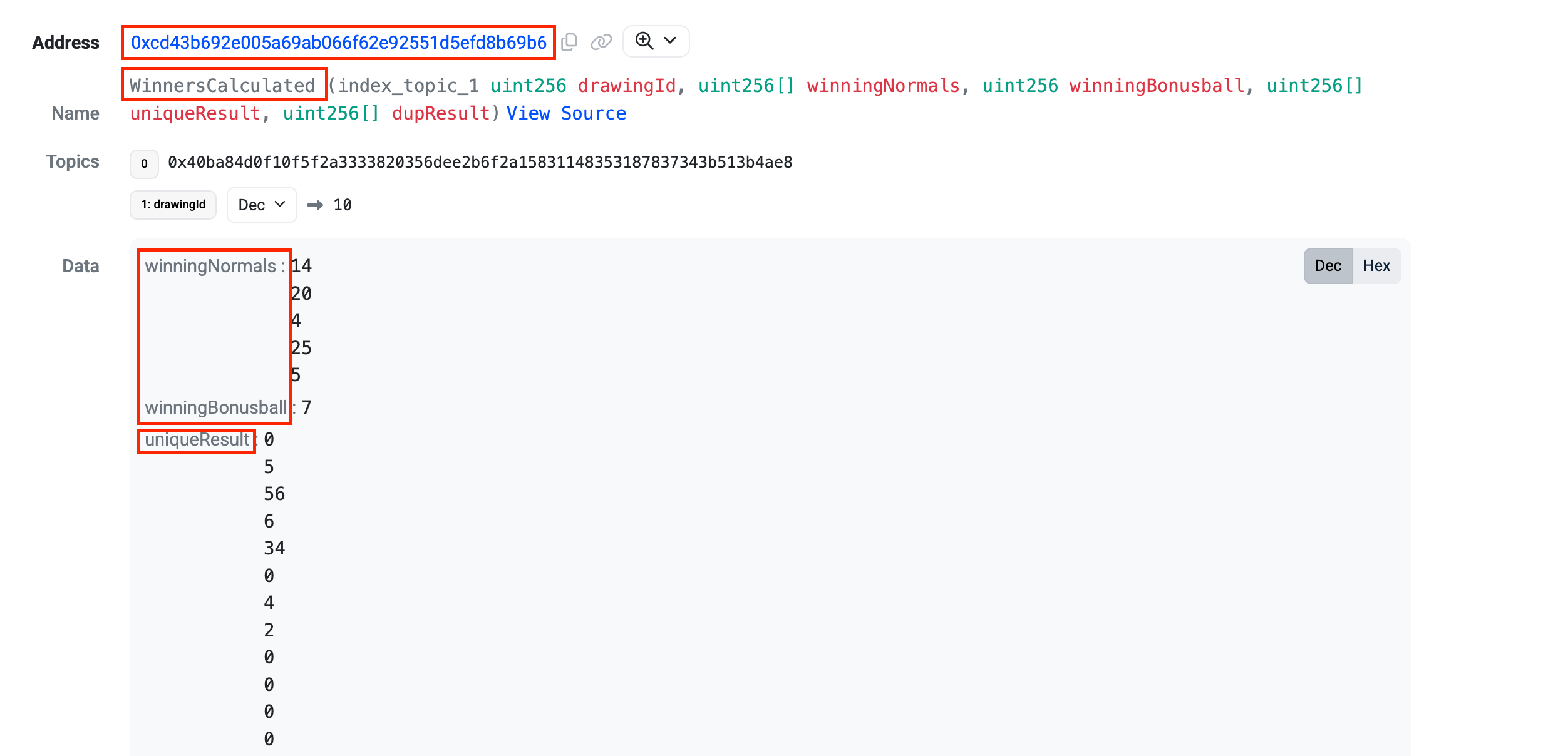
WinnersCalculated event. This event is emitted by the Jackpot contract: 0x3bAe643002069dBCbcd62B1A4eb4C4A397d042a2. The winningNormals and winningBonusball make up the 6 numbers selected as part of the draw. These numbers are generated using the random number returned by Pyth (see below for more information). The uniqueResult field shows the winners within each tier from 0-11 (no matches to jackpot). No matches will always be 0 but the rest reflect the amount of tickets in that tier. Read our article on prize tiers to learn more!
Deep Dive
Two-Party Randomness
Here is the key to why Megapot is fair: two-party randomness. When a drawing runs, two things happen:- A random numbers are requested from Pyth Network, anyone can trigger this once the drawing time arrives
- Pyth returns a random number on-chain
- Pyth’s random number is combined with an on-chain random number to create a seed
- The seed is used to select 5 random numbers and a bonusball number